

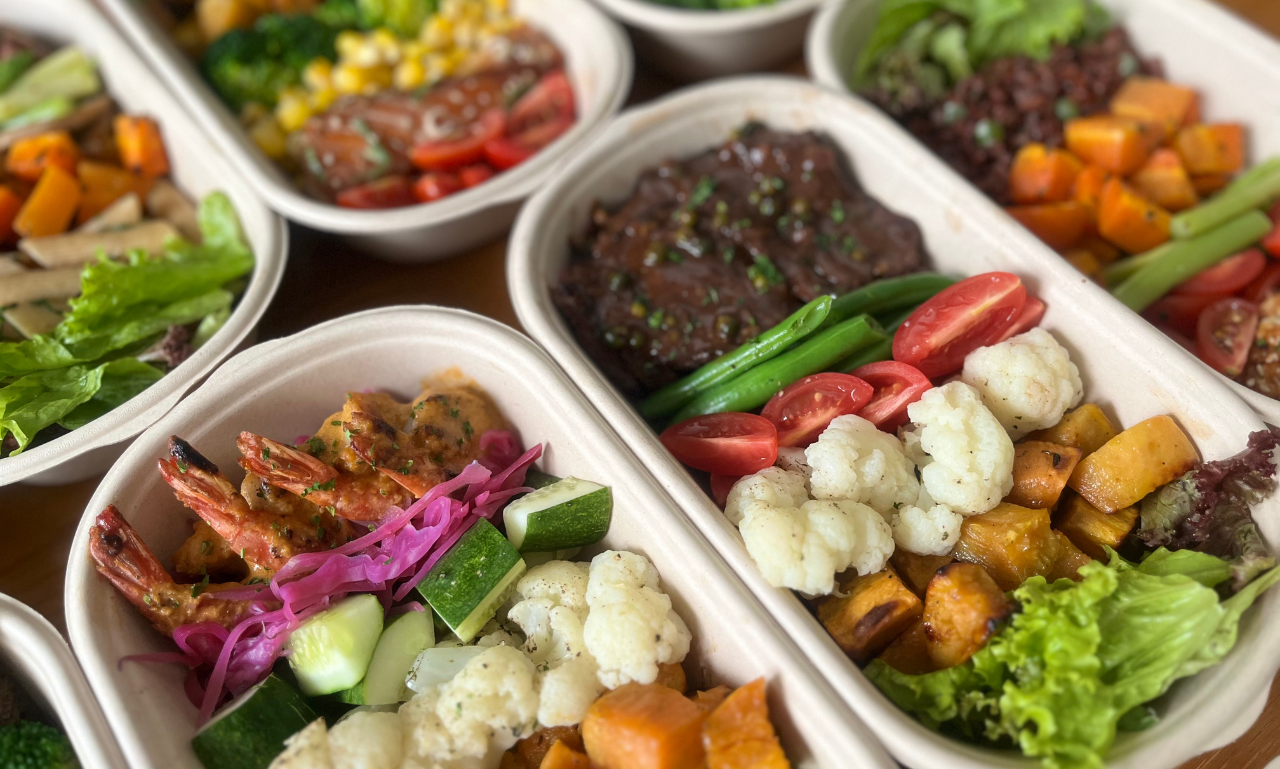
A refrigerator filled with five identical containers is only one version of preparing food ahead. Meal Prep Can Save Time, but although cooking complete meals in batches can be convenient, eating the same dish repeatedly can make those meals increasingly unappealing as the week continues. A more flexible approach to meal prep focuses on completing the time-consuming parts of cooking in advance while leaving enough room to vary flavors, textures, and combinations from one day to another.
Meal Prep Does Not Have to Mean Finished Meals
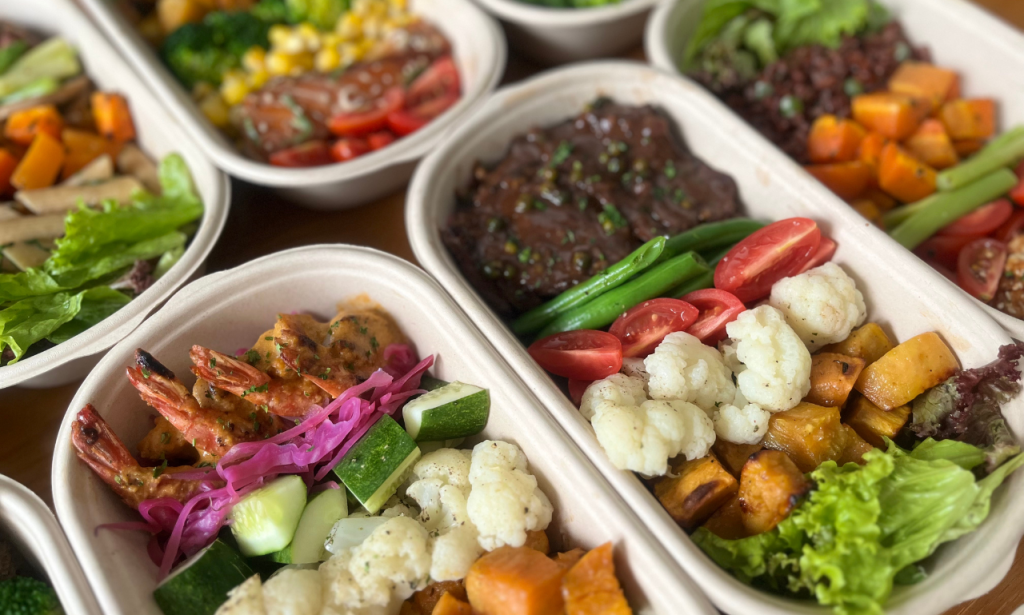
Meal prep is often associated with spending several hours cooking complete breakfasts, lunches, and dinners before the week begins. That system can work well for people who value predictability, but it is not the only way to prepare food ahead. Meal preparation can also involve washing vegetables, cooking grains, portioning proteins, making sauces, or organizing ingredients so that meals require considerably less work later.
This component-based approach preserves more flexibility. Instead of deciding on Sunday exactly what Thursday’s dinner will look like, someone might prepare rice, roasted vegetables, a protein, and two sauces that can be combined in several ways. Weekday cooking is not eliminated entirely, but many of its repetitive tasks have already been completed. For people who quickly become tired of leftovers, that compromise can make meal preparation easier to maintain.
Focus on the Tasks You Normally Repeat
Much of the time involved in everyday cooking comes from repeating small tasks. Ingredients need to be gathered, vegetables washed, chopping boards brought out, food cut, pans heated, and work surfaces cleaned. Performing these steps separately every evening can make relatively simple meals feel more demanding than they actually are.
Meal prep becomes particularly useful when it combines repetitive work. If several meals will use onions, peppers, or another ingredient, an appropriate quantity can be prepared during one kitchen session instead of starting from the beginning each night. Grains, roasted vegetables, sauces, and other versatile components can often be handled similarly. The objective is not to complete every meal days in advance, but to remove enough preparation that cooking later becomes much easier.
Choose Components That Can Serve Several Meals
Flexible meal preparation works best when some of the ingredients can move easily between dishes. A cooked grain, for example, can accompany vegetables one evening and form the base of a bowl or another meal later. Roasted vegetables can function as a side dish, become part of a filling, or be combined with other ingredients to create something different.
The more strongly a component is committed to one particular recipe or flavor profile, the fewer options it provides later. That does not mean everything needs to be bland. Instead, it can be useful to keep some foundational ingredients relatively versatile and introduce stronger flavors when the meal is assembled. This creates enough structure to save time while preserving the freedom to decide what sounds appealing on a particular day.
Use Sauces and Seasonings to Create Variety
Flavor is one of the easiest ways to make similar ingredients feel like different meals. A combination of grain, vegetables, and protein can change considerably depending on the sauce, dressing, herbs, spices, or condiments used with it. Acidity, heat, sweetness, richness, and fresh herbs can all shift the character of otherwise familiar ingredients.
Preparing two contrasting sauces can therefore provide more variety than cooking two completely separate meals. One portion of prepared ingredients might be served with a bright, acidic dressing, while another receives a warmer or more strongly seasoned sauce. This approach keeps the labor-intensive foundations consistent while allowing the finished meals to change. It is particularly useful for households that want the convenience of batch preparation without feeling as though they are eating leftovers every day.
Remember That Texture Matters Too
Food can become repetitive even when its flavor changes. Several days of reheated grains, soft vegetables, and similar proteins may become monotonous because the texture remains almost identical. Adding contrast can make prepared food considerably more appealing.
Fresh vegetables, herbs, toasted ingredients, seeds, nuts where appropriate, or other crisp elements can be added shortly before eating. Keeping these components separate during storage can prevent them from becoming soggy. Wet dressings can also be stored separately from ingredients that should remain crisp. Meal preparation works better when the goal is not simply to keep food edible but to preserve the qualities that make the meal enjoyable.
Leave Delicate Foods Until Later
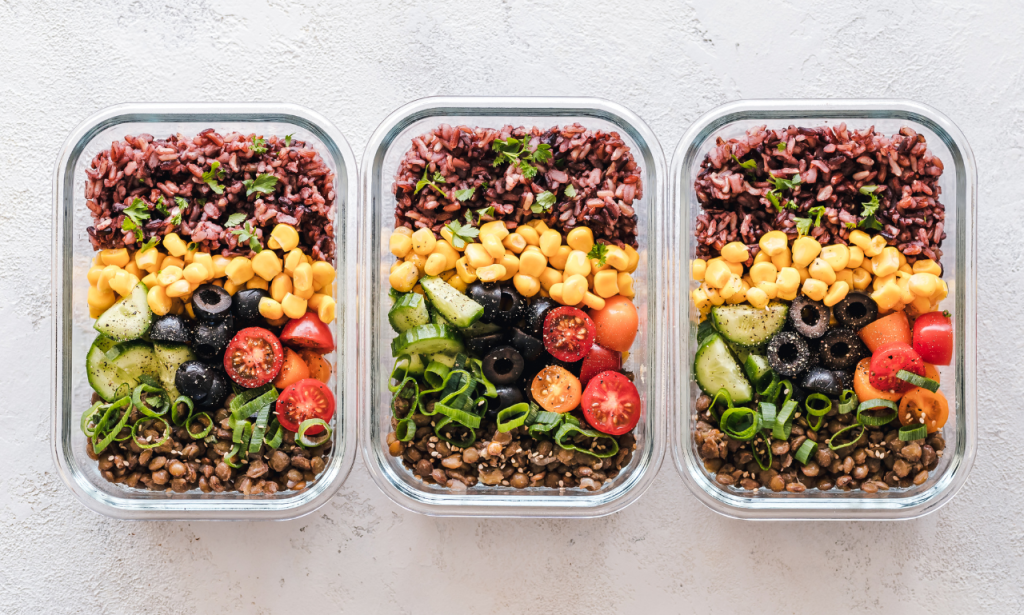
Not every ingredient improves when it is prepared several days in advance. Some foods lose texture quickly, while others release moisture, wilt, soften, or change consistency during storage. Crispy ingredients are particularly vulnerable when they are stored beside sauces or moist foods.
A more practical system prepares only the parts that benefit from advance work. A grain may be cooked beforehand while a delicate garnish is added immediately before serving. Vegetables might be washed and portioned without being cooked until the day they are needed. A five- or ten-minute finishing step can produce a much fresher meal while still saving most of the preparation time. Preparing ahead should make food easier to eat, not require every ingredient to spend several days in a container.
Consider Planning Only Part of the Week
Meal preparation is often presented as a once-a-week activity, but planning seven days of food at once can create unnecessary rigidity. Schedules change, unexpected meals occur, leftovers last longer than anticipated, and a dish that sounded appealing on Sunday may not be attractive by Friday.
Preparing food for three or four days can make the system more adaptable. A smaller midweek session can then account for what has actually been eaten and what remains in the refrigerator. This approach also reduces the amount of food that needs to maintain good quality for an extended period. The best schedule is not necessarily the one that prepares the greatest quantity at once; it is the one that fits realistically into the household’s week.
Use the Freezer to Break the Repetition Cycle
Freezing suitable foods can separate cooking day from eating day much more effectively than refrigeration alone. Instead of preparing a large batch and feeling obligated to eat it repeatedly over the following days, some portions can be frozen and returned to later.
This strategy becomes particularly useful over time. One cooking session might add a few portions of soup to the freezer, while another contributes a sauce or complete meal. After several weeks, the freezer can contain multiple options even though only one or two foods were prepared during each session. Clear labels showing the contents and preparation date help prevent frozen food from becoming forgotten. The result is a rotating collection rather than a weekly stack of identical meals.
Build Variety Through Ingredient Overlap
Variety does not require purchasing completely different ingredients for every recipe. Doing so can actually increase waste because many foods are sold in quantities larger than a single dish requires. A bunch of herbs, a cabbage, or a package of vegetables may be partially used and then forgotten.
A more efficient plan deliberately overlaps some ingredients while changing how they appear in each meal. A vegetable might be roasted for one dinner and served raw in another. Herbs can flavor a sauce and later be used as a finishing ingredient. A protein can be paired with different grains, vegetables, or seasonings. This controlled overlap allows groceries to be used efficiently without making every meal feel identical.
Plan Meals Around How Quickly Ingredients Spoil
Ingredients do not all have the same useful storage life. Some fresh foods need to be eaten relatively quickly, while frozen foods, dry staples, and more durable produce provide considerably more flexibility. Meal order can therefore be influenced by perishability rather than simply assigning recipes randomly to days.
Highly perishable ingredients can be used earlier in the planning period, while more durable or frozen components are reserved for later. This creates a natural buffer when schedules change because the later meals depend less heavily on ingredients that are likely to deteriorate quickly. It also reduces the chance that a forgotten ingredient will be discovered only after it is no longer usable.
Turn Leftovers Into Ingredients for New Meals
Leftovers often become unappealing because they are expected to return in exactly the same form. Eating the same dinner for three consecutive evenings can feel very different from using parts of that dinner to create something new.
Prepared grains, roasted vegetables, or suitable cooked proteins can sometimes become components of another meal rather than simply being reheated beside the same accompaniments. Even small amounts can contribute to a new combination. This approach is particularly useful when there is not enough of one leftover to provide a complete serving. Instead of viewing leftovers as finished meals that must be repeated, they can become ingredients that reduce the work required for the next meal.
Avoid Portioning Everything Too Early
Individual meal containers are convenient when food needs to be taken to work or eaten immediately with minimal effort. However, dividing every component into complete meals as soon as it is cooked can reduce flexibility.
Keeping some ingredients in larger containers allows portions and combinations to be adjusted later. One person may want more vegetables on a particular day, while another needs a larger serving of grain or protein. Plans may also change when an extra person joins a meal. Flexible storage makes these adjustments easier and prevents the preparation system from dictating exactly what everyone must eat. Individual containers can still be used where convenience matters most without becoming the only storage method.
Shop After Deciding How the Food Will Be Used
A refrigerator can be full of ingredients and still seem to contain nothing that easily becomes a meal. This often happens when shopping occurs before any realistic thought is given to how the food will be used.
Planning does not require assigning every item to one precise recipe. It simply helps to establish a role for most purchases. A shopper might identify several main meals, a few versatile components, breakfast foods, snacks, and one or two backup options before visiting the store. Checking the refrigerator, pantry, and freezer beforehand can also prevent unnecessary duplicates. Connecting purchases to likely meals makes it easier to use ingredients before they deteriorate.
Keep a Few Low-Effort Backup Meals
Even the best meal plan eventually encounters an evening when the planned cooking feels unrealistic. Work runs late, plans change, or the household simply does not have the energy for the meal originally scheduled. Without an alternative, ingredients may remain unused while money is spent on an unplanned replacement.
Keeping one or two easy backup options protects the broader plan. A frozen portion from an earlier cooking session can work particularly well because it requires little preparation and has a longer storage window. The specific backup is less important than its convenience. A realistic meal-prep system assumes that some days will not go according to plan and provides an alternative before that situation occurs.
Target the Part of Cooking That Causes the Most Friction
Different people struggle with different parts of preparing meals. One person may dislike chopping vegetables, while another finds cleanup frustrating. Someone else has no difficulty cooking but spends too much time deciding what to make. Families with busy evening schedules may simply lack enough uninterrupted time to prepare food from the beginning.
The most useful meal-prep strategy addresses that specific bottleneck.If decisions are the main problem, planning meals in advance may provide more benefit than cooking them early. When preparation time creates the biggest obstacle, washing and chopping ingredients ahead may be enough. For those who find cleanup most frustrating, preparing several components in one session can reduce repeated washing. Meal prep becomes easier to maintain when it solves an actual problem rather than following a standardized routine.
Keep Food Safety at the Center of the Plan
Convenience cannot override safe food handling. Prepared foods need to be cooled, stored, frozen, thawed, and reheated appropriately, and different foods have different recommended storage periods. Smell and appearance alone are not reliable indicators that food has been stored safely.
Labeling containers with preparation dates can make it easier to track how long food has been stored. Refrigerator temperature also matters, particularly when a large amount of food is being prepared for several days. When food would otherwise need to remain refrigerated for too long, preparing smaller batches or freezing suitable portions can be a better option. Reliable food-safety guidance should always take priority over preserving a meal schedule.
Choose Containers That Make Food Easy to Use
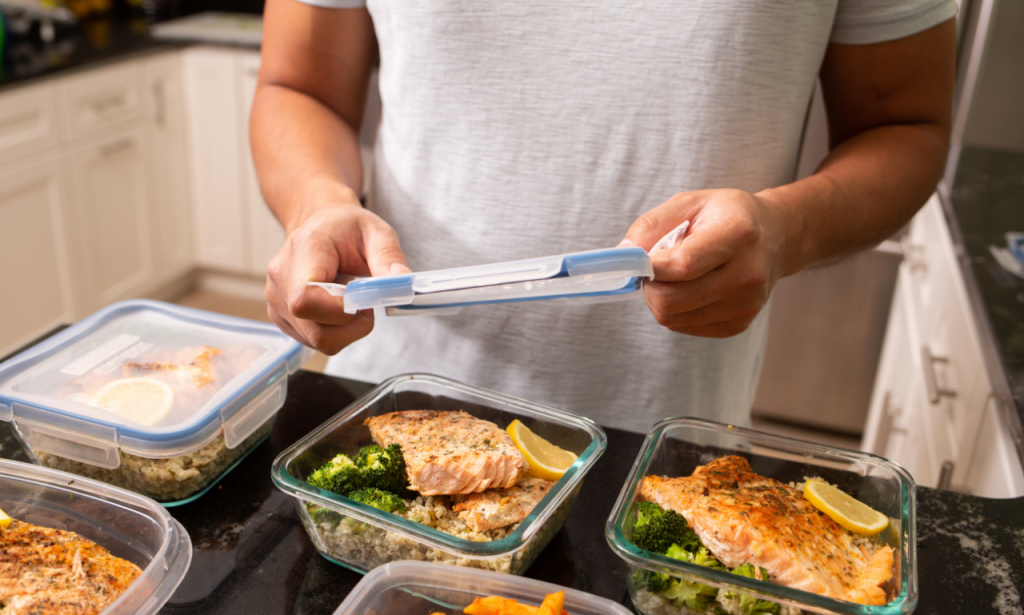
Meal preparation does not require specialized equipment, but practical containers can make the system easier. Transparent storage makes it possible to see what is available without opening several containers. Appropriate sizes help prevent small leftovers from disappearing inside large boxes, while leak-resistant containers are useful for sauces and meals that need to travel.
Consistency can also make storage easier because containers that stack well use refrigerator and freezer space more efficiently. The purpose is not to create a visually perfect refrigerator. Good storage should help prepared food remain identifiable, accessible, and easy to use before it is forgotten.
Keep Enough Flexibility to Change the Plan
A meal plan should reduce decisions rather than create another obligation. If Wednesday’s planned dinner no longer sounds appealing, a rigid system can make the household choose between eating something unwanted and abandoning the plan entirely.
Flexible preparation provides a third option. Components can be rearranged, a freezer meal can replace the original dinner, or one meal can move to another day. Because the preparation work has already been completed without locking every ingredient into a finished dish, changing the plan does not waste the effort. This flexibility can make meal prep considerably easier to sustain over months rather than treating it as a short-term organizational project.
Conclusion
The most useful meal-preparation system is not necessarily the one that produces the largest number of containers on a Sunday afternoon. Preparing too much too early can create repetition, reduce flexibility, and leave people eating meals they no longer want simply because those meals are already in the refrigerator.
Meal Prep can save substantial time while still allowing variety. Preparing versatile components, using different sauces and textures, freezing selected portions, planning around perishability, and leaving delicate ingredients until later can remove much of the weekday workload without making every meal identical.
The real measure of success is whether the system makes everyday eating easier while helping prepared food actually get used. A flexible approach accepts that schedules, appetites, and preferences change during the week. Instead of attempting to predict every meal perfectly, it prepares enough of the work in advance to make those changes easy to manage.
Also Read: Why Does the Same Food Taste Different at Different Times?
FAQs
No. Meal prep can involve preparing individual ingredients or components so that meals can be assembled or finished more quickly later.
Prepare versatile ingredients and vary sauces, seasonings, textures, fresh additions, and combinations instead of making several identical finished meals.
It depends on the food and how soon it will be eaten. Freezing suitable portions can extend storage and provide more variety across different weeks.
Yes. Planning ingredient overlap, using highly perishable foods earlier, repurposing leftovers, and freezing appropriate portions can help more purchased food get used.
