


A meal can still smell normal and reheat properly while tasting noticeably worse than it did two days A meal can still smell normal and reheat properly while tasting noticeably worse than it did two days earlier. Prepared Meals Can Stay Safe Longer Than They Stay Enjoyable because refrigeration slows many processes, but it does not freeze food in its freshly prepared state. Moisture keeps moving, starches change structure, crisp foods soften, and delicate ingredients gradually lose the qualities that made them appealing.
Food Safety and Food Quality Are Different

Meal-prep discussions often treat refrigerator life as a single countdown.
In reality, two different questions are involved: how long the food remains safe to eat and how long it retains desirable quality.
They are not interchangeable.
Food can become unpleasant before it necessarily shows obvious spoilage. A salad may wilt. Pasta can become firm or dry. Roasted vegetables soften. Fried coatings lose their crispness.
More importantly, appearance and smell cannot reliably establish whether perishable food is safe. Harmful microorganisms do not always produce obvious sensory warning signs.
Food-safety guidance should therefore determine the maximum storage period, while texture and flavor determine whether keeping a particular meal that long is worthwhile.
Refrigeration Slows Change Rather Than Stopping It
A refrigerator is a preservation tool, not a pause button.
Low temperatures slow microbial growth and many chemical and physical changes, but food continues evolving.
Water migrates between ingredients.
Starches reorganize.
Fats can undergo oxidation.
Fresh produce continues losing structure.
Aromatic compounds can change or disappear.
These processes happen at different speeds, which is why a meal containing several components can age unevenly.
Rice might remain enjoyable while the vegetables become soft. A sauce may taste fine while the bread underneath becomes soggy.
Meal-prep quality therefore depends heavily on the ingredient that deteriorates fastest.
Moisture Migration Is a Major Texture Problem
Many disappointing refrigerated meals are really moisture-management problems.
Food contains water in different forms and concentrations. Once ingredients are stored together, moisture can migrate from wetter components toward drier ones.
A crisp tortilla wrapped around a moist filling gradually absorbs water.
Croutons soften in dressed salad.
Roasted vegetables sitting in sauce lose their browned exterior.
Fruit can release liquid into surrounding ingredients.
The meal has not necessarily been prepared incorrectly. Its components simply have incompatible storage characteristics.
Separating wet and dry elements until serving is one of the most effective ways to preserve texture.
A sauce cup can make more difference to meal quality than a complicated recipe adjustment.
Crispy Foods Have a Short Refrigerator Life
Crispness depends partly on keeping the outer structure relatively dry.
Refrigeration makes that difficult.
Fried chicken, roasted potatoes, breaded vegetables, toasted toppings, and similar foods often absorb moisture during storage. Steam trapped during cooling can accelerate the effect.
The refrigerator’s humid enclosed environment does not recreate the conditions that produced the crisp texture initially.
Reheating can sometimes restore part of it.
Dry heat from an oven, toaster oven, or air fryer can remove surface moisture more effectively than reheating methods that trap steam.
Even then, the result may not perfectly match freshly cooked food.
For meal prep, this makes crispy dishes better candidates for shorter storage or component-based preparation.
Cooked Vegetables Continue to Soften
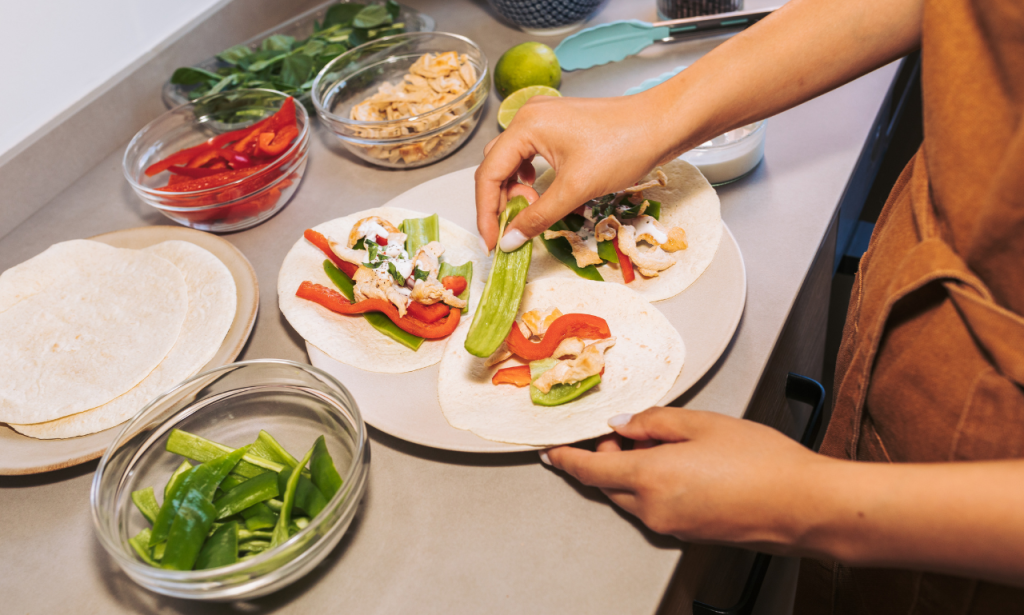
Vegetables present another challenge because cooking has already altered their cellular structure.
The degree of change depends on the vegetable and cooking method.
Produce cooked until extremely tender on preparation day has little structural reserve left. Refrigeration followed by reheating can make it even softer.
Slightly firmer cooking can work better for meals intended to be reheated later.
This does not mean vegetables should be served undercooked.
The goal is to account for the fact that storage and reheating form part of the total preparation process.
Vegetables with sturdy structures often tolerate meal prep better than delicate greens or vegetables whose appeal depends heavily on fresh crispness.
Starches Change After Cooling
Rice, pasta, potatoes, and other starch-rich foods undergo physical changes as they cool.
Cooked starch molecules partially reorganize during storage, a process commonly associated with starch retrogradation.
The result can affect firmness, dryness, and overall texture.
Cooked rice may become noticeably firmer in the refrigerator. Pasta can absorb sauce and lose its original bite. Potatoes may develop a different consistency after chilling.
Reheating can reverse some textural changes, especially when moisture is managed appropriately.
The extent varies by food.
This is one reason a dish that tasted perfectly balanced immediately after cooking may need slightly different handling when prepared several days ahead.
Pasta and Sauce Can Age Better Separately
Pasta stored in sauce continues interacting with that sauce.
It can absorb moisture and become softer, while the sauce itself may thicken as liquid moves into the pasta.
For some dishes, that integration is desirable.
For others, it produces a heavy texture by the time the meal is eaten.
Separating pasta and sauce can provide more control, particularly when meals are being stored for several days.
The same principle applies to grains paired with very wet sauces.
Component storage is not always necessary, and it creates additional containers. But it can substantially improve meals where texture contrast matters.
Rice Requires Careful Food-Safety Handling
Cooked rice deserves particular attention because food quality is not the only concern.
Uncooked rice can contain spores of Bacillus cereus. Some spores can survive cooking, and improper temperature control afterward can allow bacteria to multiply.
Prompt cooling and refrigeration are therefore important.
Large amounts of hot rice should not be left sitting at room temperature for extended periods.
When reheating stored rice, follow appropriate food-safety guidance and avoid repeated cycles of warming and cooling.
The broader lesson extends beyond rice.
Meal prep works best when food-safety planning begins immediately after cooking rather than when the container is finally removed from the refrigerator.
Cooling Food Properly Protects the Whole Batch
Preparing several meals at once creates a cooling challenge.
A large pot or deep container of hot food can remain warm internally for much longer than a shallow portion.
That matters because perishable foods should move through unsafe temperature ranges promptly.
Dividing food into smaller, shallow containers can help it cool more efficiently.
Refrigeration should not be delayed unnecessarily simply because the food still feels warm.
Modern food-safety guidance generally prioritizes prompt cooling under appropriate conditions rather than leaving prepared meals on the counter for hours.
The exact recommendations vary by food and jurisdiction, so official local food-safety guidance should take priority when determining storage practices.
Condensation Can Ruin Texture Early
Placing steaming food into a tightly sealed container can create another problem: condensation.
Water vapor rises from the warm meal, reaches the cooler lid, condenses, and falls back onto the food.
This is particularly damaging to foods intended to remain dry or crisp.
Cooling and storage therefore require balance.
Food needs to be refrigerated promptly for safety, while excess trapped steam should be minimized where practical.
Meal-prep containers also vary in how they manage moisture.
A completely airtight environment can be useful for preventing drying and absorbing refrigerator odors, but it may not preserve every texture equally well.
Storage needs should follow the food rather than one universal container rule.
Salads Are Really Several Foods in One Container
A prepared salad illustrates nearly every meal-prep texture problem at once.
Leafy greens are delicate.
Cut vegetables release moisture.
Dressings add additional liquid and acidity.
Cheese, nuts, seeds, croutons, fruit, grains, and proteins all have different storage characteristics.
Mix them together days in advance and the ingredients begin changing one another.
Keeping dressing separate is the obvious improvement, but other separation can help too.
Crunchy toppings can be added immediately before eating. Particularly wet ingredients can remain apart from greens.
The objective is to delay the final assembly.
A salad prepared as components can retain the convenience of meal prep without forcing its most fragile ingredients to spend several days in contact.
Cut Fruit Can Deteriorate Faster Than Whole Fruit
Whole produce has natural protective structures.
Cutting exposes interior tissue to air, moisture loss, microorganisms, and enzymatic reactions.
Some fruits brown quickly after cutting.
Others release juice and become soft.
The ideal preparation method therefore depends on how long the food will be stored.
Washing and portioning some fruit in advance may be convenient, while leaving more delicate items whole until closer to eating can preserve quality.
Acidic ingredients such as citrus juice can slow browning in certain fruits, although they also change flavor.
Again, convenience and quality exist on a spectrum.
The most aggressive preparation is not always the most effective meal preparation.
Proteins Behave Differently During Reheating
Cooked meat, poultry, fish, eggs, tofu, and legumes do not all respond to refrigeration and reheating in the same way.
Lean meats can become dry when reheated aggressively.
Fish may develop stronger aromas and can easily overcook during a second heating.
Braised meats stored with sauce often tolerate reheating better because moisture is available throughout the dish.
The original cooking method therefore influences refrigerator performance.
Foods that depend on precise doneness are often less forgiving than dishes designed around slow cooking and moist environments.
When planning several days of meals, choosing recipes that tolerate reheating can be more effective than trying to rescue delicate foods later.
Sauces Often Improve While Crunchy Components Decline
Not every refrigerated change is undesirable.
Some soups, stews, curries, and sauces can taste more integrated after resting.
Flavor compounds have additional time to disperse through the dish, and aromatic ingredients can become more unified.
That makes these foods strong candidates for advance preparation.
Their texture also depends less on crisp surfaces.
Contrast this with fried foods, dressed salads, and toasted sandwiches, where the appeal depends heavily on keeping one component dry and crisp.
Good meal planning therefore considers not merely whether food can be refrigerated but whether refrigeration works with or against the dish’s intended character.
Reheating Method Can Determine the Final Texture
Microwaves are convenient, but they are not ideal for every food.
Microwave heating is particularly useful when speed and moisture retention matter. Soups, stews, rice dishes, and many sauced foods can reheat effectively this way when handled correctly.
Foods requiring a dry or crisp exterior may benefit from an oven or air fryer.
A stovetop can provide better control for sauces, pasta, curries, and dishes that need stirring or additional liquid.
Choosing a reheating method according to texture makes a significant difference.
Meal prep is not finished when food enters the refrigerator.
The reheating stage should be considered part of the recipe.
Repeated Reheating Usually Works Against Quality
A large container repeatedly removed, warmed, partially eaten, cooled, and returned to the refrigerator creates unnecessary quality and food-safety complications.
Portioning meals before storage avoids much of this problem.
Only the portion being eaten needs to be reheated.
Individual containers also reduce repeated handling of the rest of the batch.
For households where different people eat at different times, portioning can be particularly useful.
The same principle applies to sauces and toppings.
Storing them in practical serving amounts reduces the need to repeatedly expose the entire batch to changing temperatures and utensils.
Freezing Can Beat Refrigeration for Longer Meal Prep
Preparing an entire week of meals does not mean every portion must remain refrigerated for the entire week.
Freezing can preserve later portions more effectively for foods that tolerate it.
Soups, stews, cooked beans, many sauces, casseroles, and certain grain-based dishes can be good candidates.
Freezing dramatically slows many changes that continue in the refrigerator.
Texture after thawing depends on the ingredients, however.
Some vegetables become softer. Emulsified sauces may separate. High-water-content fresh produce can lose its structure.
A useful strategy is to refrigerate meals intended for the next few days and freeze portions scheduled for later.
This reduces the pressure to make every recipe survive extended refrigeration.
Containers Influence Meal Quality
Storage containers perform several jobs.
They limit moisture loss, reduce exposure to refrigerator odors, protect food from contamination, and make portioning easier.
The best shape and size depend on the meal.
Shallow containers help with cooling.
Compartment containers can keep ingredients separate.
Small containers work well for dressings and toppings.
A container should also be appropriate for its intended reheating method. Not every plastic product is designed for microwave heating, for example.
Labels are useful when preparing multiple batches.
Recording the preparation date reduces uncertainty and makes it easier to use older portions first.
Planning Around Texture Produces Better Meal Prep
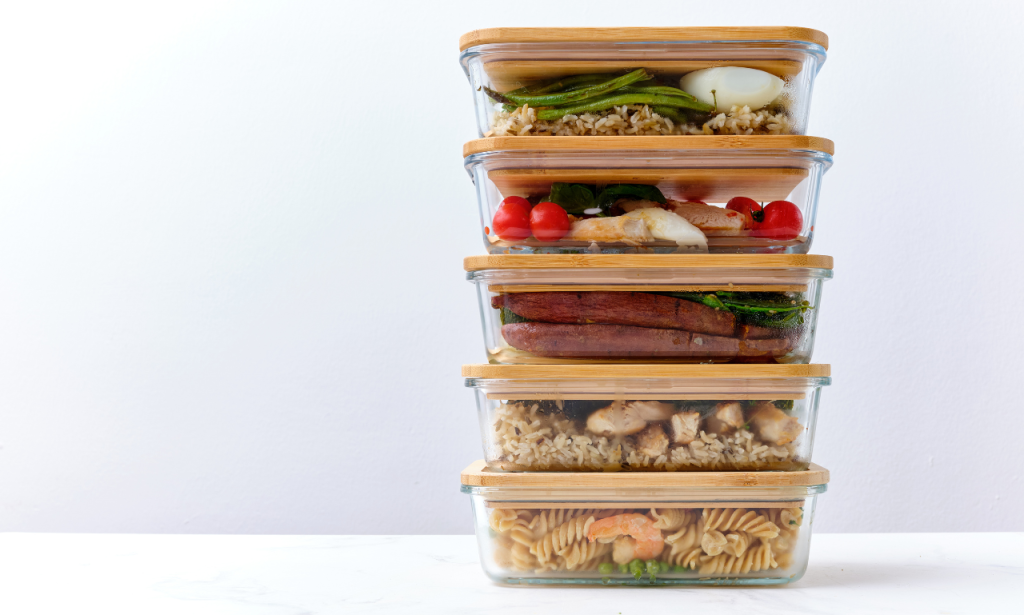
Many meal-prep disappointments begin with recipe selection.
A meal designed to be eaten immediately is not automatically a good candidate for four days of refrigeration.
Instead of asking whether a favorite dish can technically be stored, it can be more useful to ask which components should be prepared in advance.
A grain can be cooked ahead.
Vegetables can be chopped.
A sauce can be prepared.
A crunchy topping can remain separate.
A delicate element can be added on the day of eating.
This modular approach preserves much of the convenience while reducing the textural compromises associated with storing fully assembled meals.
Conclusion
The refrigerator preserves time, but not perfectly. Every prepared meal continues changing after the container closes, and the changes that matter most are often physical rather than dramatic signs of spoilage.
Prepared meals can stay safe longer than they stay enjoyable because moisture migration, starch changes, condensation, oxidation, and repeated reheating steadily alter texture. Dishes built around sauces and soft textures usually tolerate that process better than foods dependent on crispness, freshness, or precise doneness.
The most successful meal prep therefore does not simply maximize refrigerator life. It plans around how food actually changes. Separating incompatible components, choosing suitable reheating methods, freezing later portions, and following appropriate food-safety practices can make the fourth meal feel far less like leftovers from the first.
Also Read: Why Do Certain Foods Become More Appealing When You Are Tired?
FAQs
Storage limits depend on the ingredients and applicable food-safety guidance. Many cooked leftovers have relatively short recommended refrigerated storage periods, so official local guidance should be followed.
Cooking, cutting, salt, storage, and temperature changes can release moisture from vegetables, which then collects in the container or moves into other ingredients.
Often, yes. Separating sauces can help prevent pasta, bread, greens, and crispy foods from absorbing too much moisture.
For many freezer-friendly dishes, freezing later portions can preserve quality better than keeping every meal refrigerated for an extended period.
